Disappearing Men
I was a secret soldier; working at night and out of the headlines. My last missions were to Ukraine. They were my last missions because my body and mind became frayed. They were also my last missions because I found love.
I was a secret soldier; working at night and out of the headlines. My last missions were to Ukraine. They were my last missions because my body and mind became frayed. They were also my last missions because I found love.
After twenty years of war, from Afghanistan to the place I eventually called it quits, I said enough is enough. Well, to be fair, it wasn’t actually I who said it, it was something inside of me, something soldiers know well.
A year later, at the height of the war, I returned to Ukraine with my partner. She, to visit family and friends, and I, to be there for her. And, I hoped, make some sense of what I had done over the last two decades. We traveled towards war, and we traveled cautiously; war was part of both our lives.
You cannot fly into Ukraine. Due to the obvious threat of Russian air. You must take a rickety train from elsewhere in Europe. The train cars are humid and packed. The ride takes somewhere between twelve and fourteen hours with sporadic delays and checks by authorities. Women lean out the cracks between the cars and blow cigarette smoke into the black countryside. The cyclical clack of the tracks briefly quiets their thoughts. Little boys run and play up and down the carriage late into the night. Parents no longer care about bedtime; one of many things that burns out along the way as a single parent during wartime.
We share a cabin with a young mother and her son, Max, of about seven or eight. He hasn’t seen his father (an officer in the army) for eight months; and he hasn’t lived with him in years. His mom moved abroad to raise him with family. They tried to settle on the east coast. But the stress, hard work, and dedication has wore her thin. They’re returning to Kyiv to be a family again, despite the obvious dangers.
Max isn’t doing well in school or in the community she says— hard to control, doesn’t fit in. He’s been asked to leave the after school programs. Possibly ADHD says the doctor... Yeah, possibly. Or possibly he’s struggling because his life has been turned upside down from the biggest war since World War II. And possibly because his dad, and all the dad’s of his friends, are in the trenches fighting for their lives and the lives of their countrymen. And, just possibly, somewhere in the back of his young mind, he thinks he might be there next. And a rational mind would be lying if it told him it wasn’t possible.
It’s been a full ten years since Russia started its war on Ukraine, and almost three since the full scale invasion. Things in the city are status quo at best. But mostly they are precarious. Life moves on the best it can, and Ukrainian life moves on the only way it knows— via struggle.
Ukraine is beautiful. And the city Kyiv is no exception. After we arrive I begin to go for walks in the afternoons, alone. It’s late summer and the streets are busy and noisy. Women are everywhere. They patrol the streets trying to remain distractedly-busy. Riding the metro to a fro, keeping a sense of normality; hitting the shops and bazaars in an attempt to hold up the household, or multiple households; commuting to work and forcing smiles for the customers— making ends met doesn’t stop when your country is invaded; and some, in an attempt to pull the sheets over their eyes, or drown out the bedroom all together, drink, party, and carry on as if nothing is happening.
I see a couple sitting together at a popular lookout over the Dnipro. No words are spoken, faces unchanging. I watch them for some time. I’ve seen these expressions before. He’s leaving, return: unknown. Clutched together she holds his chest like a child holding her little bear. Eyes red and swollen— there’s no more tears to produce. Months, maybe years, of dreadful anticipation finally realized. Her lover has been plucked by the controlling forces. He’s despondent, frozen. Staring off in his first (but surely not last) thousand yard stare. He’s run out of words of consolation. They never seem to work anyway, like rubber balls bouncing off stone walls. So he turns inward and asks himself: What will it be like? What will I be asked to do? Will I lose friends? Will I have to kill? What about the drones? But a more palpable question is written all over their faces— What if he dies? The call has come and he must answer. Ukraine depends on it, freedom depends on it. Some men must disappear.
I break at a popular lunch spot in the Podil neighbourhood. There’s fourteen women and one man. The server tells me where the nearby shelter is incase of an air raid. They’re almost daily now. I scan my phone, a BBC journalist reports from a Ukrainian military bootcamp near the frontlines, in the Kursk direction. The TLDR: some of the men are worried that the training might be too short, too quick. There’s a stark reality in the few photos attached with the article, it’s even noticed by the civilian journalist: almost all the recruits are in their 40’s and 50’s. And then slowly, like a sinking ship, the facts eventually settle on the ocean floor. And after they’ve sunk, the questions begin to float back to the surface— Where are all the men? And then… How much longer can Ukraine hold on?
“All of you young people who served in the war. You are a lost generation.”
—The Sun Also Rises, Earnest Hemingway
What does a nation lose when it loses a generation? How many books will never be written because their authors lay dead in the ditches of Bakhmut? How many ballads and anthems will never be sung because they faded away with the heroes of Azovstal? And what about the works of art, the poems, and the plays? The inventors, the athletes, the leaders? We can only imagine what the world will never get to experience because of the lost Ukrainian souls who died defending Kyiv, Mykolaiv, Sumy, Kharkiv, Kherson, Mariupol, and the countless villages in Luhansk and Donetsk.
Ukraine’s culture runs deep. Poets, writers, musicians, artists, freedom fighters, heroes, and martyrs. Taras Shevchenko wrote and spoke about Ukrainian freedom almost 200 years ago, eventually becoming exiled. Lesya Ukrainka a female poet from the 1800’s, wrote and spoke about freedom and liberty. And say what you will about Bandera, the means were worth the end to him— Ukrainian independence.
Those who remain hold on strong to the culture they have. There’s no loss of pride. Others are inspired to create more, to create anew. Art and music are everywhere. In the tunnels, along the walkways, and centred in the squares. Proud for their heroes, happy for the partial freedom they enjoy where it’s safe. People cycle, walk, laugh, and drink. Concerts pack stadiums, street performers gather crowds that ‘safe’ societies only wish. Ribbons and flags are passed out. And every event is punctuated with the energetic shouts of the crowds; Slava Ukraini! Heroiam Slava!
I stand in Maidan square watching little blue and yellow flags of memorial flap in the warm breeze. The flags are surrounded by wreaths and flowers and pictures of the fallen; they look brave. A flag for each. There’s thousands. Maybe tens of thousands. They’re stuck in the soil, the soil of their ancestors, the Kyivian Rus, the cossacks, the heroes. They flags dance in the wind. They sparkle, they come alive, they move and shake between the photos; kissing their edges and making a pattering. It brings them alive, just briefly. It whispers to them. The wind still blows my friends. The sun still shines. And so does Ukraine, thanks to you.
I think back to the height of my war years, Iraq and Afghanistan. The flags that dotted the front porches. The bumper stickers and the rallies. The faces on the TV, and the newspaper clippings that now sit faded in a shoebox under my fathers bed. Was it the same? No. We had a choice, we could have said no. I look around the square at the people, the Ukrainians. Their faces are tired; everyone is tired. But when you have no choice, the choice is simple.
“There is nothing to look at,
No one to speak to.
You don’t feel like living in the world,
But you have to live.”
—Taras Shevchenko
The fourth turning has turned for Ukraine. Young men and women have a large task ahead of them. Holding the line and then, rebuilding. Rising up from the broken buildings, torn up streets, and dusty ashes. A generation has been lost but a people have grown stronger, once again. It’ll be on them to tell the stories, the stories of their heroes and why they died. Like kickboxing champion Vitalii Merinov, the defenders of Azovstal, nineteen year old Ruslana Danilkina, the brave souls of Zmiinyi Island, and the Ghost of Kyiv. But also of their own personal stories. Of children without their fathers and wives without their husbands. Holding fast and long in a serious of never ending alarms, strikes, breakthroughs and setbacks. Failed peace talks, threats of nuclear war, mass evacuations, and death. Always there is death.
A generation has been lost but a new generation will grow in its place. It will stand on the backs of those who sacrificed defending freedom for the people of Ukraine. The young men and women must grasp what has been given to them from those who’ve laid down their lives. They must seize the opportunity.
".. To you from falling hands we throw
The torch; be yours to hold it high.."
—In Flanders Fields, LCol. John McCrae
On the train ride in Max craves male-ness. Some masculinity. He climbs onto my bunk and rubs shoulders with me as he shows me the latest game on his tablet. It’s a war game. He shoots down Russian planes over makeshift landscapes with a selectable range of aircraft. It isn’t long before he’s pulling at my beard, thumb wrestling, and showing me his pushups and pull-ups. We joke and laugh. I speak one and two word phrases in Ukrainian, he speaks four and five word phrases in English. We become pals on the fourteen hour journey back home. Back to war.
Max doesn’t know it yet but he will be responsible for what Ukraine will become. The men are disappearing and he will need to step into their great big shoes. Max gives me hope that something is passed down through the generations in the hearts of Ukrainians. Something he won’t know for quiet some time, if ever. But inside him is a flame. A flame that burns and never goes out. A flame that was lit generations ago by men and women much greater than you or I.
For me, I didn’t make much sense of war and why humans do the things we do. But on that trip I did see hope. And I saw the beauty of humanity and our tenacity to get through difficult things. It really is a wonder of the world; our ability to lean on each other in difficult times, we don’t do anything alone. And hope seeds a better future.
Will Max become the first generation of Ukrainians who don’t write, petition, sing, dance, paint, draw, scream, fight, kill, starve, and die for their independence? Will Max step out of the ashes and stand proudly independent alongside the heaps of Ukrainian souls who’ve laid down such a price the likes the world has never seen for the independence of their people?
I believe it. It’s been a long time coming.
Things I Learned in JTF2; Canada's Elite Commando's
I spent around 16 years in the Canadian Special Forces. Beginning in the Canadian Special Operations Regiment and finishing as a Team Leader in JTF2.
Here are some things I learned or traits I tried to embody but forgot sometimes; letting my emotions or ego take over.
I spent around 16 years in the Canadian Special Forces. Beginning in the Canadian Special Operations Regiment and finishing as a Team Leader in JTF2.
Here are some things I learned or traits I tried to embody but forgot sometimes; letting my emotions or ego take over.
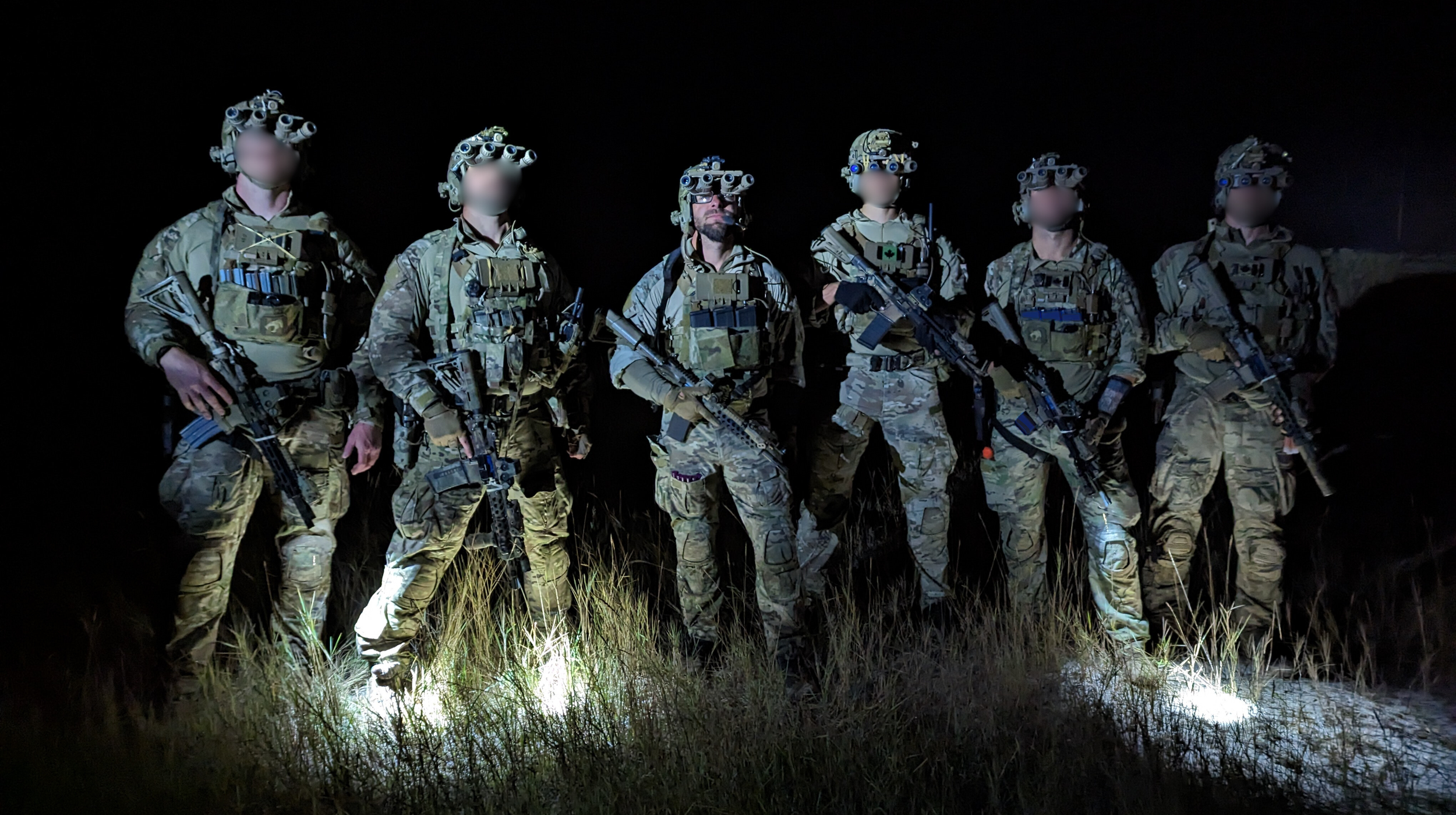
There’s always someone better.
Never think you got it. Firstly, because no one does, everyone here (on earth) is just making it up as they go along. There are no adults. We’re all just children with jobs, mortgages, and a boat load of anxiety. Tier 1 Special Forces is no exception.
And if you think you got it, the second someone new waltzes in the door who ‘has it’ more than you, you’re fucked. I’ve seen it, and I’ve experienced it. Your ego starts to sound the alarm. But I was the best shooter in this team! And then it starts to rationalize itself with some lies. Well, I’m better than he is at this or that. Or, I’ve got more combat experience than he’ll ever have. This is not good; for performance, for anything.
You’re good. You’re you. That’s fine, you’re enough baby. And don’t worry… that new guy’s got a boner problem anyway. So ha.
It works the other way around too. When you don’t think you have it, or when it’s clear, you absolutely do not have it. I experienced this as a 19-year-old private in the army. In the back of my mind I always dreamed of becoming a JTF2 Assaulter, but it seemed as likely as becoming a quarterback in the NFL.
And then, one day, two guys from my squadron went to JTF2 selection. I looked up to these guys, they were both really good soldiers and were the fittest dudes in the Troop. I couldn’t beat them in lifting weights, pushups or pullups, or running, or anything. And when they came back after two or three days having failed, their sad faces carried the death of my dream. If they couldn’t do it— it was out of the question for me. It took me eight years to realize I was wrong.
But the reality is, they’re not you. They might look better on paper with a certain aspect or trait, hell, they might even be better than you with something you’re good at. But that’s okay. There’s always someone better. And we don’t get the trophy, or the girl, or our dream job with some talent or genetic gift. The thing is, the secret is, your determination, your commitment, and your consistency are how you get it.
Tom Brady was drafted 199th in the NFL draft. Thomas Edison had a hundred failed experiments before the lightbulb, and someone right now is being born in poverty to sick and disgusting parents, and they’ll rise up to be a king. You can too. Don’t worry about the others. There’s always someone better, but that doesn’t mean shit.
If it needs to be said, say it.
I struggled with this one. Usually, I would see some sort of injustice, or an officer messin’ things up, and because I knew my comments would fall on deaf ears; or because the change I knew we needed would take a herculean effort; I held my tongue. Other guys did too.
And then, because I held my tongue too long, when things were about to go off the rails, or I just couldn’t stand it anymore, I would burst out with a flare of emotion. Telling them all why they were so wrong and why I was so right. Didn’t they see their stupid ideas were stupid? Didn’t they see that there was a better way to do things? Maybe. Maybe they did, but now they didn’t care.
Once, fed up with a certain technique we used to teach CQB (close quarter battle), I ranted to the more senior instructors and explained there was a better way. My way, a far superior way. And when that didn’t really get much traction, I spent days working on an email. I had anecdotes, comparisons with other teaching methods, I pointed out that it wasn’t how the guys in the teams did it after they graduated, and I even had a little spreadsheet with green and red colours so it was easy to see their error.
Obviously, it didn’t work.
The opposite is also true. People held their tongue when things needed to be said but it was uncomfortable because the person who needed telling was of a much higher rank. Or because the person who needed to say it didn’t want to seem like a burden, this usually took place when said person was beginning to climb the ladder. Not the boys in the teams. If it’s your job to protect your subordinates from abuse or short-sided errors from the powers that be, you must be willing to have the uncomfortable conversations. If you can’t, don’t take the promotion.
If it needs to be said, say it. Don’t wait. Use tact and be polite, leave the emotion at the door— yes, even if you think it’s a matter of life or death; because usually, it isn’t. Give them time to understand it from your perspective. The insight didn’t come to you in a flash, and it won’t for them either. And if it still doesn’t fly, that’s it. Accept it and move on.
Most things you can’t do alone; some things you must do alone.
I guess it goes without saying that the old adage is true. There’s no ‘I’ in: “All you fuckers get on the bus.”
We all work as a team. And there’s no way I would have accomplished what I did in the military if it wasn’t for my friends around me. They pulled me half-starved out of swamps. They wrestled me away from three hundred pound bouncers and put me to bed when I was too drunk. And they challenged me everyday to be the best I could without ever knowing it. If I have any regrets, it was those last years, when I lost my spark. I could have tried a little harder. Not for the man, but for them, the men. My brothers.
If I was any good at being an Assaulter it was because I was striving to be good for them. My medals and my pictures in the hallways don’t say anything of me. They speak of the guys around me. None of it would exist without them.
When I came into work in the mornings, it was their faces on my mind. If I volunteered to go on a mission or a deployment, it was because I knew they were gonna be going. And if things were hard, which they often were, it was them that I’d ask for help.
Thank you boys. From the bottom of my heart. Thank you.
But here’s something that most people won’t tell you. Some things you must do on your own.
Friends, family, and therapists, will all say that they are there for you, and they bloody well might be. But no one is inside your head but you. When things are really bad, when things are bad because you caused them. It’s on you.
To truly make a change or get through those difficulties in life, you need to reframe it. You need to wake up and tell yourself how it’s going to be; day, after day, after day. And sometimes, minute to minute.
All great achievements were done alone. All great comebacks were done alone. We’re born alone and well die alone. Stop trying to find something or someone to help you. You have everything you need. Just look inside yourself and tell yourself those words. You know what to say and you know you need to say it but are avoiding it.
If you believe you need something, you will; if you believe you are something, then you will be. But the reality is— our beliefs create our reality. If you believe you need the bottle or those pills or that weed, well, the world will confirm just that. If you believe you can’t do it alone, then the universe will collapse and conspire to make it so.
Sometimes it’s foolish to look for solutions in the outside world; they’ll only confirm what sick beliefs you can’t let go of.
Meritocracy still exists, sort of.
I’m happy to report that the scourge of DEI did not infect the ready commandos that protect this country.
If you work hard and you got it, you’re in. Anyone can try, everyone gets a fair shot. And I often took solace in the fact that the men around me, the boys in my squadron, were the best. That we all earned it equally. And we kept each other honest every day. Because if someone started to slip… they would be informed, ricky tick. And the same would go for you, fair is fair.
But nothing is perfect and life isn’t fair. In all jobs and walks of life people get a leg up that they didn’t quite deserve. And great people get passed over for deeds they’ve done in silence. Humans decide which accolades to hand out and to whom. And humans are, well, human. They make mistakes too. Some of the greats work away in the shadows.
I often felt like I was one of these. I never did receive any big awards or claps from the crowd. I never got any Commander’s coins, bravery medals, or pats on the back for extra efforts. I was with my boys working away, raising my hand for the next mission, because that’s why we were there.
Watching others get what you think you deserve is hard. But like I said, life ain’t fair. And you know what you did, and you didn’t do it for that crap anyway. It only stings because your ego is playing games again.
So stand up. Give ‘em a clap. They worked hard too. It doesn’t mean you didn’t. We’re all a team and we’re all trying our best. So hold your head up high brother. You did good work, I’m proud of you.
Playing the game.
I struggled with this one too.
Don’t take things too seriously. I see many people going about their workdays stressing about things or battling colleagues like if things just don’t go the way they’re supposed to go someone will die or something will explode.
I actually worked in a life and death environment. And the vast majority of the time, no ones life was on the line. There is a lot of practice, make believe, and yeah— lot’s of emails and paperwork too. Most of it (all of it) doesn’t matter.
“Don’t fight the plan, fight the fight.” I don’t remember where this saying originated by I credit my buddy Justin for making me remember it.
Ask yourself, what’s the goal here. Keep it in mind. And you will often find most people, including yourself, are trying to fight the plan, not the fight.
I used to guide groups on week-long canoe trips. We would choose ‘a leader for the day’, and ask them to lead the pack up of camp in the morning, plan the paddling route and breaks, and otherwise just be responsible for the day.
After hearing their plan, if I thought, no— if I knew there was a better way to do it, that they only had the 75% solution instead of the 100% solution, I didn’t say a word. Who cares, literally, who cares. I’ll tell you— your ego. You just want to be right. You don’t actually want to accomplish the mission. You want to fight the plan and not the fight. Well, just shut up and let this person work. It’s how they’re going to learn anyway.
“A good plan today is better than a perfect plan tomorrow.” — And if you know where that quote comes from, you’re my friend.
Okay, let’s talk about ‘them’. The bosses, the higher ups, the people with corner offices, the people with their faces framed by cheap wood and plexiglass in the front hallways and mess halls. Why are they always messing with us? Why can’t they see it our way? Why can’t they leave us alone?
I’m not sure I can give you a perfect reason why. Maybe sometimes they are just messing with us. But I’ll tell you what I came to realize and it did help a little bit. I would tell it to the younger guys when they were in some sort of lunchtime rant about ‘them’.
Everyone is just solving problems. That’s what work is; problem solving. Even if you’re just making someone’s morning coffee, you’re solving this persons energy problem, and she’s gonna give you a little tip for it.
And when it comes to JTF2, we’re solving the country’s problems. The government says, hey, we have a problem here. Then they look for people or organizations to solve said problem. And if the problem is big and dangerous enough, they call JTF2.
The CO of JTF2 receives the problem and then does the same calculations that the government did. Can I solve this? What skills, equipment, or people, are required to solve this problem? If he needs to pass it down, he does.
And so by the time you or your little team gets this problem it’s safe to say that there’s a whole bunch of people that couldn’t solve it. That’s why it’s now on you.
And here’s where it gets tricky. We start to say things like; we need this or that thing or we can’t get it done! Or, we need more time, why can’t they give us more time! Or, we don’t have enough people, we need more. We need more of something or we can’t get it done. And for some reason, we scream up the hill for these things, we think the problem should come to us with all the solutions already packaged with it.
(Don’t get me wrong, your superiors are supposed to enable you and provide you with what you need to do your job. That’s not exactly what I’m talking about and it only goes so far.)
The reality is, they don’t have those things. They don’t have those people, and they don’t have the time. If they did have those things and those people and the time— they would have fucking solved the problem themselves! They wouldn’t need to push it down to you. So there’s always going to be this push and pull, this juxtaposition between the problem solvers at the bottom and the people who pushed the problem onto them.
Get over it and get on with it.
Listen to everyone. Reject most of ‘em.
“We did it differently back in my day.”
I’m sure everyone from every walk of life has heard something like that. And while sometimes it holds some valuable lessons, mostly it does not. Things change, obviously.
I often found some itchy urge inside of me in the later war years. Iraq, etc. When newer guys would be spitballing ideas about how to do this or that. Things we did in Afghanistan ten years before. At first, I would try to school them, sometimes it worked, but mostly it didn’t.
It’s okay to reinvent the wheel sometimes. People need to come to their own conclusions on things. And what seemed to be such an amazing idea back in the day; sometimes it really wasn’t, we were just fooling ourselves. Or just making the best with what we had. Gun tape and chicken wire solutions.
When a new guy is going through his training pipeline, and generally within his first year in the stalls, he’s inundated with advice and stories from dozens of old dogs. I tell them all the same thing. Usually right before I lay down some ‘Jwat wisdom’. “Guys, listen to everyone, reject most of ‘em— including me.”
Have an open mind, suck in all the info you can. But sift through it for yourself. Make it make sense in your mind and apply it to the environment you find yourself in now. Not what the environment was a hundred years ago. A beginner’s mind, in all things.
Own your mistakes.
This is common dog in our world. It’s drilled into you and if you don’t get it, you ain’t gonna make it. And they have ways of finding out if you’re a little weasel or not. So if you’re not actually a truthful person and you’re only doing it when you think ‘people are watching’, you’ll get found out.
The civilian world might not go to these lengths or have the culture of ownership but the universe does. Karma is real and it will bite you so hard you’ll wish you were dead. You’ll cry to the heavens and not even realize it’s your karma, it’s you.
It takes balls to stand up in front of your squadron as a new guy and apologize for shooting a hostage in training. Or worse, hitting a friendly. But it happens, pretty much to us all. It even happens when you’re not a new guy anymore. Literally everyone makes mistakes, so don’t feel bad, and don’t hide them. Owning mistakes builds trust within your team and with yourself. No one gets fired for an honest mistake.
Be accountable for your shit. Don’t get so out of balance that the world needs to come crashing down on you to rebalance. And if you’re currently making a mistake in your life and you know it— stop it. Stop it right now man. You can do it.
Take the sh*t jobs.
I’m not talking about sweeping the floors and cleaning the break room.
I’m talking about those tasks or side quests that just don’t seem to line up with our career goals. Maybe it’s a new assignment. Maybe it’s a dog and pony. Maybe it’s helping the boss with a new client, or a work trip for some weird new product that you know ain’t gonna lead anywhere.
Take them. Do it. And learn it. So many times in my career did I reluctantly take on some other course or task that didn’t see to serve my main purpose— jumping out of planes and killing bad guys. But you know what? It always made me better, and it made me more employable. It made me see connections in things where others didn’t. And it made me meet the people on the sidelines, in the ops rooms, and in the mechanic bays. And having relationships like that and understanding what those people go through is a valuable lesson for whatever you’re trying to accomplish. And it’s just the right thing to do.
Our lives are a long haul. And you never know who you’re going to meet or what crazy thing you might experience. You have time. Take the shit jobs. Take things on and become a student of more things than just your little world of ‘me’.
Have fun.
Self explanatory.
I guess I would just say, don’t have so much fun that the bosses come sniffing around. I made that mistake a lot.
But boy was it fun ;)
Smoke
A writer once said to “write from your scars, not your wounds”. Implying that no one wants to hear you bleeding profusely on the page. They want to hear the writer tell the story of their wounds in totality; what happened to them and how they healed. How did this scar form and what meaning do they ascribe to it now?
A writer once said to “write from your scars, not your wounds”. Implying that no one wants to hear you bleeding profusely on the page. They want to hear the writer tell the story of their wounds in totality; what happened to them and how they healed. How did this scar form and what meaning do they ascribe to it now?
But what about the overlapping scars? What about the wounds and damage that lives below our perceptions, what about the wounds that are diffuse, or the mysterious ones that live in some sort of orbit in our psyche’s— appearing in seeming randomness throughout our lives. How can we be certain of which wounds are healed, which are torn forever, and where one gash ends and another begins.
I’ve lived a life in cahoots with trauma and death. But understanding which wounds I have and from where and when they came eludes me. And when we finally look for the source of the bleed we often seek out others. Psychologists, therapists, family, friends, colleagues, anyone who’ll listen, anyone who has an opinion. And thus far I’ve pieced together this: doctors are good at naming things, soldiers are good at rationalizing things, family and friends are good at condemning things, but the universe is good at explaining things— if you can listen.
The interior of a Light Armoured Vehicle III, or LAV3 as it’s colloquially called in the Canadian Army, is ingrained in my memory. I must have spent over five hundred hours inside of it over the course of two years which included seven months in Afghanistan in 2008. Initially, while in Canada, I was trained as a gunner, the operator who sits inside the gigantic weapon turret in the middle of the war machine. One little chair for the gunner, one for the crew commander. Seven men sit ready in the trunk, and a driver up front. But by the time we deployed to Afghanistan in the spring of 2008, I had changed roles and was now one of the troops in the storage compartment of the vehicle, jumping out of the big truck and into action on foot depending on the task; sweeping the road for mines or IED’s (improvised explosive device), searching buildings and compounds, fighting the enemy on foot, or any other action required.
This was a relief for me. I had often wondered, or day-dreamed (if you can call it that), about what it must be like to be in the LAV— especially the cramped and mechanical gunner’s turret— if the vehicle were to get hit by an IED.
The turret of the LAV 3 has to be the most unforgiving, cramped, and painful little place to be. You try to resist any unwanted movements or jerks from the large armoured vehicle as it bounces of the rocky terrain. Every little dial, button, handle, or control switch, is cased in some sort of sharp-edged machined aluminum, and when the vehicle rocked or shifted your body slammed into these hard metal pieces. The whole module housing the gunner and the crew commander was also incased in a kind of metal fence, to protect anyone else in the vehicle from getting a hand or limb crushed while the gunner was traversing the turret around looking for threats. Oh, and stored in a large metal bin between the crew commander and the gunner was a stack of primary ammunition: hundreds of 25mm high explosive/incendiary rounds each about the size of a child’s forearm.
To imagine being in this turret surrounded by sharp metal and bulky army idiot-proof switches, perched next to stacks of high explosives, while the vehicle got hit by a roadside IED, was a little personal nightmare for me. Fortunately for me it wasn’t to be. Unfortunately, for many, it was. And it was the fate of one of my best friends, Stephen Stock, on August 20th 2008, he was from Medicine Hat, he was 25 years old.
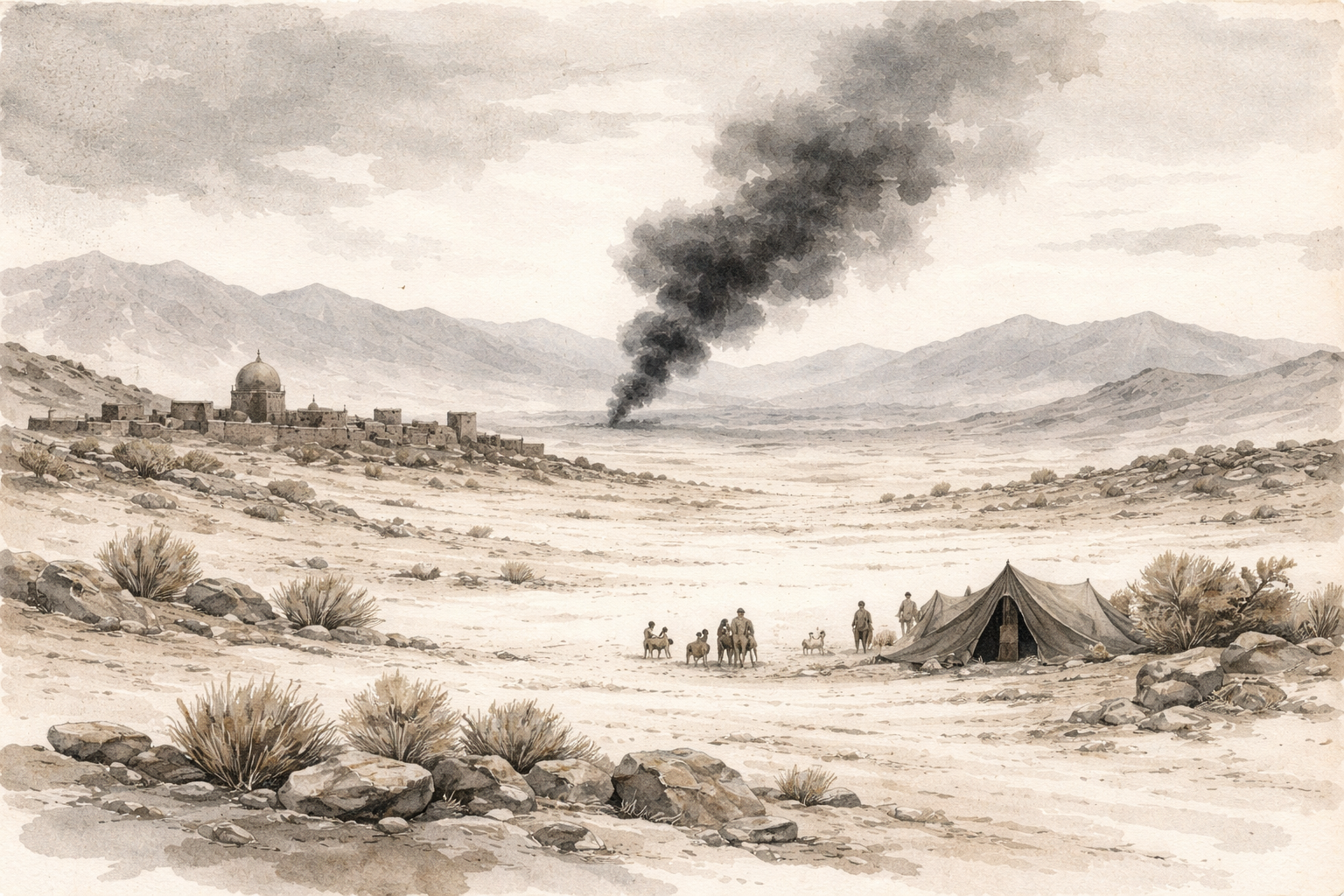
On the 20th of August my section was stationed at FOB Wilson. That day there were no missions for us, and we went about the small camp maintaining gear, watching movies cramped around laptops, or generally doing anything to avoid the screaming 40 degree heat. I don’t remember the time but it seems to be around late afternoon or early evening in my memory. Someone pointed out a large black smoke plume streaming up towards the sky, maybe a few kilometres down the road from our FOB. Something was on fire, and not the benevolent type of fire. Thick black smoke usually meant something was on fire that wasn’t supposed to be. Some comments were made about what it could be. No one from our camp was out that day. We weren’t aware that one of our sections from another camp was out with a Troop of armoured soldiers from Val’Cartier, and driving down Highway 1 near our FOB.
This was Afghanistan during the height of the war— there’s always stuff on fire or exploding. At some point we all get desensitized. The small group commenting on the fire broke and everyone strolled across the thick crushed gravel back to their green tents and little worlds of refuge. An hour or two later we were summoned by our Troop Warrant. He delivered the news. We sat and stood amongst cots, dusty gear, cases of water, and the odd personal item in a soldiers bunk space. One of the sections from our Squadron, the one my friend Steve was the gunner for, was hit by a massive IED just down the road. The LAV3 they were driving had only four members (Thankfully). Two were killed instantly, one slowly, and one got ejected from the vehicle during the blast and broke both his legs but survived.
The news lands and the tent is silent… every soldier hearing the worst possible news, followed by the second worst: our friends are dead, and there’s nothing we can do about it.
Sapper. Stephen Stock, Corporal. Dustin Wasden, and Sergeant Shawn Eades. Their callsign was Echo Two One Bravo, E21B.
It’s hard to accept and there’s only so much you can do. We’re still stuck in a FOB in an extremely dangerous area of Afghanistan. I chat with a friend of mine, another close friend of Steve’s. We reminisce about a hiking trip in the Rockies the three of us and my brother took shortly before coming to Afghanistan. I have a vivid memory of Steve rolling a massive round boulder down a huge embankment and giggling like a small boy at the speed and destruction the rock had on the other stones and ledges as it careened down the mountain.
We were in month six of a seven month tour of duty. We had already lost two guys that month, and would loose three more in a quick afternoon in about two weeks. Suffice it to say, morale wasn’t at an all-time high. You can feel the mood change during these waning months. This is around when most soldiers start to fade from excited adventure to melancholic acceptance, or worse— fear. The fun is over, we just want to get home, alive.
Traditionally, when a soldier was killed in action there was a Ramp Ceremony held for him or her on the tarmac at the large airbase outside Kandahar City. And once again on the tarmac in Trenton when they landed back home. In Afghanistan this ceremony served as a ritual for saying goodbye to the ones we lost, to deliver them back home with heroic dignity, and for those still breathing to come together and support each other; ensuring the enemy doesn’t have a morale victory as well.
Teammates and friends carry the caskets of the fallen in military parade fashion onto a waiting transport plane while other soldiers from all participating NATO countries stand at attention; watching, and paying their respects to the fallen. Each fallen soldier has an escort, a partner or close friend, who stays with the fallen for literally every minute until they are brought home and laid to rest. My friend John went with Steve.
“We can’t go back to base. The operation is starting tomorrow”, was the word around our camp the day after Steve, Shawn, and Dustin were killed, “we’ve got shit to do.” A large and important company sized operation had been in the works for weeks. A large scale clearance operation in the Zhari district where many Taliban had been hiding out for years, and where around a dozen or more Canadians had been killed since ‘06. We were not going to go back to the airfield for the ramp ceremony, we were never going to see our friends again. The thick, dark, fast-rising plume of smouldering LAV3 smoke would be the last memory we would have of them.
No goodbyes, no parades. A mission into the dusty depths of some Taliban hideouts. Suck it up and move out. It’s time to go to work. And to work we went.
I’m retired now. I share more stories than I used to. People were always curious though. Many civilians like to comment on soldiering. Or ask questions. Must be hard, they say, all those pushups? How heavy are your ruck sacks? Did you ever jump out of an airplane? And, There’s no way I could handle all that discipline, I don’t know how you guys do it! The five am wake ups, not for me. What’s the hardest part they finally ask. What’s the toughest shit they made you do?
It’s hard to say, we say.
It’s hard to say.